Healing Through Connection, Regulation, and Presence
Equine-assisted therapy may be right for you if…
Connection
- Feeling disconnected from yourself or others
- Relationships that feel unsafe or unpredictable
- A sense of isolation that words haven’t touched
- Longing for connection without the pressure of conversation
Regulation
- Emotional responses that feel hard to manage
- Chronic tension, anxiety, or hypervigilance
- Nervous system patterns that haven’t shifted with talk therapy
- Needing something beyond traditional therapy to move forward
Presence
- Difficulty slowing down or staying in the moment
- Living mostly in your head rather than your body
- Struggling to feel grounded, safe, or settled
- Wanting healing that happens through experience, not just insight
At Blue Shores Counselling, our equine-assisted therapy program is grounded in the understanding that healing happens in safe, attuned relationships. Our work with horses is not about “using” animals as tools or interventions. Instead, it is about creating opportunities for authentic connections between humans and horses based on mutual respect, consent, attunement, and presence.
All of our equine-assisted sessions are ground-based. The work happens through observation, connection, movement, mindfulness, relational exercises, and therapeutic experiences alongside horses who participate freely and organically in the process.
Horses are highly sensitive, relational beings with deeply attuned nervous systems. They respond honestly and immediately to human emotional states, body language, tension, incongruence, and regulation. Because of this, they can help people become more aware of what is happening internally — often before words are available.
For many clients, the presence of a calm, attuned horse creates a profound sense of grounding, safety, and connection that can support deep emotional healing.

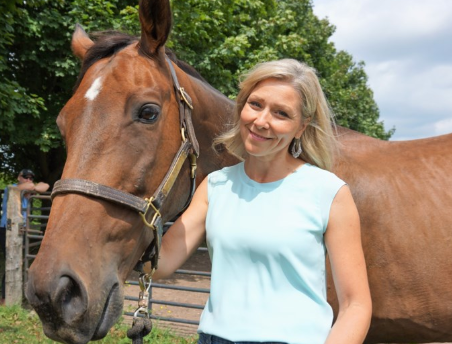
Nestled atop the scenic arboreal mountains overlooking Georgian Bay and Thornbury is the home of a couple horses with special jobs.
Nervous System Regulation & Heart Coherence
Our approach is deeply informed by attachment theory, interpersonal neurobiology, trauma research, and nervous system regulation.
Research explored by the HeartMath Institute suggests that horses may influence human nervous system regulation through heart-rate variability (HRV) coherence. Horses have large, powerful electromagnetic heart fields, and studies exploring horse-human interactions have observed synchronization and shifts in physiological regulation during calm, connected interaction.
Heart rate variability is a measure of nervous system flexibility and regulation. When humans are anxious, hypervigilant, overwhelmed, or dysregulated, HRV patterns often become more chaotic. Calm, regulated states are associated with more coherent HRV patterns. Interacting with emotionally regulated horses may help support shifts toward greater physiological regulation, grounding, and emotional stability.
Many clients describe feeling calmer, more present, more connected to their bodies, and more emotionally settled in the presence of horses.
A Trauma-Informed, Attachment-Based Approach

Our work is also influenced by the principles of Natural Lifemanship, a trauma-focused, relationship-centered model of equine-assisted psychotherapy.
Natural Lifemanship emphasizes that healing happens through connection — through connection with ourselves and with others – not control, compliance, or performance.
For clients with histories of trauma, attachment wounds, neglect, chronic stress, emotional dysregulation, or relational injury, these experiences of safe connection and co-regulation can be deeply reparative.
Equine-Assisted EMDR & Deep Brain Reorienting (DBR)
We also offer Equine-Assisted EMDR and Equine-Assisted Deep Brain Reorienting (DBR) sessions for clients processing trauma, attachment wounds, and nervous system dysregulation.
These approaches integrate trauma-processing therapies with the regulating presence of horses and the natural environment. The grounded, responsive presence of horses can help clients remain connected to the here-and-now while processing difficult material.

Types of Equine-Assisted Therapy We Offer

Attachment & Relational Healing

Equine-Assisted Psychotherapy

Equine-Assisted
EMDR

Equine-Assisted Deep Brain Reorienting (DBR)
Meet Our Equine Therapy Team
Julia Lippert

Julia is a Registered Psychotherapist and Director of Blue Shores Counselling Inc. She works extensively with trauma, attachment wounds, emotional dysregulation, and nervous system healing.
Julia’s training includes Natural Lifemanship Level 1&2, as well as the EA-EMDR (Equine Assisted EMDR), EMDR and DBR, Emotional Horsemanship, and certification as a Clinical Traumatologist.
Andrea brings a wealth of knowledge and training, with a focus on how trauma impacts the brain and nervous system. Andrea has a compassionate, grounded, and relational approach to her work with clients.
She integrates her Equine Assisted Training from Natural Lifemanship Level 1 together with the Equilateral Protocol (EA-EMDR) and her many specialized trainings in IFS, DBR, Structural Dissociation Theory Integration, and other nervous system informed trainings.
Andrea Foster

Christina Malley

Christina offers a warm, attuned, and trauma-informed approach that supports clients in feeling emotionally safe, understood, and empowered in their healing process.
Her training includes Natural Lifemanship Level 1 & 2, the Equilateral protocol (EA-EMDR), DBR, Training in Structural Dissociation Theory Integration, Connected Horsemanship and training from the Heart Math Institute.
Who Equine-Assisted Therapy May Help
- Trauma and Complex Trauma
- anxiety and chronic stress
- emotional dysregulation
- attachment wounds
- dissociation
- grief and loss
- hypervigilance
- relationship difficulties
- low self-worth
- difficulty trusting others
- nervous system overwhelm
- difficulty feeling safe, grounded, or connected